

This post has already been read 96 times!
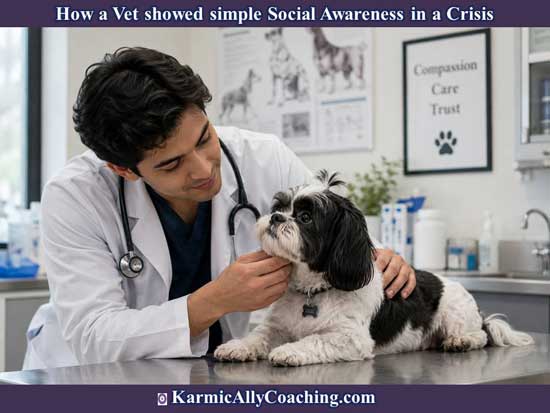
A few weeks back I saw social awareness in a non-corporate environment which reiterates why reading the room is crucial if you want to make the right impression.
That Monday was a day I don’t want to ever repeat again. Coco Junior started to show signs of going into a heatstroke, which was prevented by timely action.
I noticed the signs around 3pm and immediately called the vet’s clinic and was told to come when they opened at 5.30pm. They’d treat it as an emergency case, and I wouldn’t have to wait for a turn.
There wasn’t much traffic and I reached 20 minutes early. The place was dark, but I was allowed inside as the temperature was 42 degrees Centigrade with a real feel of 46.
The attendants normally stay in and have a siesta until the evening shift and there I was with Coco Junior in the dark. I put her on one of the tables and pressed my head to hers and prayed.
Nearing the clinic opening time, I noticed a tall young man in jeans and t-shirt walk in with a rucksack.
He sat quietly in a corner. I didn’t pay much attention because I was focused on Coco Junior.
When the lights came on, I saw him again. By now he was wearing a doctor’s coat and realized he must be one of the new interns.
My vet runs a teaching clinic, and many young vets get their mandatory residency there.
To be chosen means the newly qualified vet must be very good.
This young vet was. He patiently listened to me, asked the right questions and immediately started treatment.
Coco Junior is known to snap and bite but in her condition; she wasn’t up to doing much and seemed to take a liking for this vet.
After a worrisome night, I woke up the next morning to find my dog back to her normal self. She drank water after 24 hours and was voraciously hungry.
We were back at the vet’s for follow up. Even though the pet was feeling better, and could have nipped his fingers, she was still nice to the young vet and allowed him to stroke her under the chin.
It got me thinking about how important it is to read the room before taking any action.
The young vet had seen me and the dog quietly waiting in the corner of the clinic.
He saw how the attendants treated me with respect and got me a chair to sit in the dark. How respectful I was to the attendants apologizing for interrupting their siesta as they would be working till 8.30pm.
He had read the room and when the lights came on, wasn’t surprised to see 3 attendants ready to take care of Coco Junior.
I’m not a VIP client but one who has a standing in the clinic which also took care of Miss Coco Chanel.
There was a relationship beyond dog owner and dog service provider.
What struck me later was that the young vet hadn’t just demonstrated clinical competence.
He had demonstrated social awareness.
Before he spoke to me, he had observed what was happening around him. He noticed the interactions, understood the dynamics, and adjusted his approach accordingly.
What this experience reminded me about Reading the Room
Watching this interaction unfold made me realize that social awareness is often misunderstood.
People assume reading the room means being political or changing who you are.
I see it differently.
Reading the room is the ability to notice context before deciding how to act.
That skill matters, whether you’re treating an anxious dog or leading a team through uncertainty or a challenging project.
1. Observe before you act
The young vet didn’t rush in trying to establish authority.
Instead, he chose to watch.
He noticed the environment, the interactions, and the emotional state of both owner and pet before stepping in.
In the workplace, high performers sometimes move too quickly into problem-solving mode.
In fact, influence often starts with observation:
- Who is speaking and who isn’t?
- Are there concerns people are avoiding?
- What emotions are present beneath the conversation?
- What relationships already exist?
Executive presence isn’t always about saying more. Sometimes it’s about seeing more.
2. Competence builds credibility, but awareness builds trust
The vet clearly knew what he was doing. Being competent alone wasn’t what stood out to me.
It was the way he approached the situation.
He listened before acting and adjusted to the emotional reality in front of him.
Trust is often created in moments where people feel seen.
At work, professionals are frequently promoted for technical expertise but remembered for how they make people feel.
You don’t build influence only through delivering results.
You build influence through understanding people and demonstrating emotional intelligence in every situation.
3. Relationships are part of the room too
One detail has stayed with me.
The young vet noticed the existing dynamic.
He saw the respect between me and the attendants and understood there was history and trust already present.
Instead of disrupting it, he worked with it.
Many professionals walk into meetings assuming every interaction starts from zero.
It rarely does because every room already contains:
- history
- alliances
- expectations
- emotions
- unspoken rules
Reading the room means recognizing that context before deciding your next move.
The workplace cost of missing the signals
Many capable professionals don’t struggle because they lack expertise.
They struggle because they unintentionally miss cues about influence, timing, perception, and relationships.
Missed signals can quietly affect credibility, visibility, and opportunities.
That’s exactly why I created 7 Signs You’re Misreading the Room at Work.
If you’ve ever wondered whether you’re unintentionally undermining your influence or executive presence, you can download your free copy here:
👉 7 Signs You’re Misreading the Room at Work
Reading the room isn’t office politics. It’s actually leadership intelligence in action.

 Posts
Posts
 I adhere to the Certified Coaches Alliance Code of Ethics and Standards. A copy is available on request.
 Let's Talk through the Connect Form: