

This post has already been read 64 times!

In a previous post, 3 Ways Leaders Can Support Important Team Goals, I introduced Kaizen as one of the most powerful (and often misunderstood) leadership principles.
In that post, I shared the example of how an Audit Team leader could apply process Kaizen from the planning, implementation and debriefing stages with his team. This would not only improve the audit process, but also improve the process for the next audit.
Kaizen isn’t about pushing harder or demanding constant change. It’s about creating the conditions for steady, sustainable progress with one small improvement at a time.
Whether you’re leading a team, a department, or an entire organization, Kaizen begins with how you lead yourself. It then extends to how you enable your people to grow.
Let’s explore both.
Kaizen for Leaders: Continuous improvement starts with you
Anyone who has committed to personal or professional growth knows the truth: improvement rarely looks like a straight line. It’s uneven, sometimes uncomfortable, and often slower than we’d like.
The Kaizen method offers leaders a different way forward.
Rather than chasing dramatic breakthroughs or overnight transformations, Kaizen focuses on continuous, incremental improvement.
Often referred to as the “1 per cent rule,” it encourages you to get just a little better every day knowing that those small changes compound into meaningful, long-term results.
Originally developed as a business philosophy and famously adopted by Toyota (often called The Toyota Way), Kaizen proved that radical results don’t require radical disruption.
In fact, the opposite is often true.
Why radical change fails Leaders
Many leadership initiatives fail because they rely on:
- Sudden behavioural overhauls
- Aggressive performance pushes
- Unrealistic expectations of instant results
Leaders experience this personally too. Think of the executive who commits to “fix everything” at once. Their communication style, time management, confidence, strategic thinking, only to burn out or revert to old habits.
Kaizen offers a more realistic leadership philosophy:
- One improved conversation at a time
- One better decision-making habit
- One refinement to how you show up under pressure
Leadership presence, credibility, and trust are not built overnight. They are practiced daily.
As Rory Vaden, best-selling author and world-renowned strategist on success through self-discipline, stated in his The Rent Axiom,
“Success is never owned. Success is only rented, and the rent is due every day.”
(Take the Stairs: 7 Steps to Achieving True Success)
Kaizen helps leaders pay that rent consistently.
Kaizen is a Process, not a Goal
One of the most important mindset shifts leaders must make is this: Kaizen is never “done.”
You don’t achieve Kaizen and move on. You commit to it.
For example, once you reach a goal, like stronger executive presence, better delegation, or higher team engagement, Kaizen thinking helps you:
- Maintain those gains
- Refine what’s working
- Adjust before problems escalate
This approach removes the emotional rollercoaster that often accompanies leadership growth. Instead of waiting for distant milestones, Kaizen keeps leaders grounded in what can be improved today, with the resources and awareness they already have.
Encouraging Kaizen in the Workforce: Leadership beyond control
While Kaizen begins with the leader, it truly comes alive when it’s embedded into the culture of the workforce.
Many organizations attempt Kaizen from the top down, mandating “continuous improvement” initiatives, rolling out new processes, and expecting buy-in by default.
Unfortunately, this often leads to resistance.
The reason being that Kaizen cannot be forced.
It works best when improvement happens at the individual level, where employees are closest to the work, the challenges, and the opportunities.
A business is only as strong as the people within it.
The Leader’s Role: Create the conditions, not the pressure
Your role as a leader is not to micromanage improvement, but to create an environment where improvement feels safe, supported, and worthwhile.
Your actions set the tone for your team members to feel psychologically secure.
Here’s how.
1. Create a blame-free environment
Continuous improvement requires experimentation, and experimentation includes missteps.
If people fear punishment for trying something new, they will default to playing safe. Kaizen thrives in environments where:
- Learning is valued over perfection
- Mistakes are treated as data, not failures
- Curiosity is encouraged
When employees know they won’t be blamed, they’re far more willing to refine processes, suggest improvements, and take ownership.
2. Give ownership, not micromanagement
Kaizen depends on autonomy.
When leaders micromanage, they remove flexibility and stifle initiative. When leaders trust their teams, people naturally look for better ways to work.
Encourage your team to:
- Improve their own workflows
- Identify inefficiencies
- Suggest small, practical changes
Ownership fuels motivation and motivated employees improve continuously.
3. Use metrics as feedback, not pressure
Measurement is important, but how it’s used matters.
Kaizen-friendly leaders encourage teams to monitor and report on performance so they can:
- See what’s working
- Learn what isn’t
- Make informed adjustments
Metrics should support learning, not fear. When teams view data as feedback rather than judgment, improvement becomes collaborative rather than stressful.
Kaizen as a Leadership System, Not Just a Philosophy
The most effective leaders don’t rely on inspiration alone. They rely on systems.
Kaizen becomes sustainable when leaders have:
- Clear frameworks for reflection and improvement
- Tools to strengthen communication, decision-making, and emotional intelligence
- Practical resources that support consistent leadership behaviour
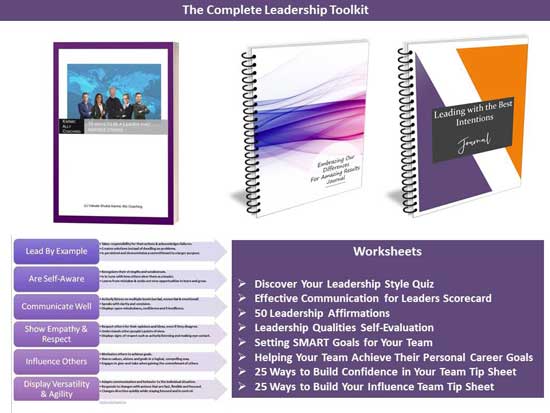
This is exactly why I created The Complete Leadership Toolkit.
Supporting Your Kaizen Journey: The Complete Leadership Toolkit
Kaizen asks leaders to show up better every day but that’s hard to do without the right structure.
The Complete Leadership Toolkit is designed to support leaders who want to:
- Strengthen their leadership presence
- Improve how they communicate and influence
- Lead with clarity, confidence, and consistency
- Embed continuous improvement into their daily leadership habits
Rather than overwhelming you with theory, the toolkit provides practical, actionable resources you can apply immediately, aligning perfectly with the Kaizen philosophy of small, meaningful steps.
👉 Explore The Complete Leadership Toolkit here
Final Thought
Kaizen reminds us that leadership excellence isn’t created in dramatic moments. It’s built quietly, daily, through intentional improvement.
When leaders practice Kaizen personally and create environments where their teams can do the same, growth becomes sustainable, human, and powerful.
And that’s how real leadership progress happens -one step at a time.

 Posts
Posts
 I adhere to the Certified Coaches Alliance Code of Ethics and Standards. A copy is available on request.
 Let's Talk through the Connect Form: