

This post has already been read 88 times!

Shadow work often gets misunderstood. It’s not about “fixing” yourself or digging endlessly into the past. At its core, shadow work is the practice of increasing awareness of the internal patterns that quietly shape how you think, react, decide, and relate, especially under pressure.
When left unexamined, these patterns can influence everything from relationships to decision-making and leadership presence. When understood, they become sources of clarity, choice, and strength.
One of my clients who worked with me on enhancing her executive presence had a tendency of extreme responses when her team didn’t deliver on time.
It was creating an adverse impression on her boss and instead of instructing her to be specific with delegated tasks; the conversations would turn to her people management skills, behaviour and attitude.
We decided to work on her triggers, and she soon understood the actual reason for her out of proportion reactions, especially under pressure.
Once she became self-aware of the underlying cause, her responses became more professional, emotionally intelligent and her relationship with her team improved.
In leadership roles, these unexamined patterns matter more than we often realise. They shape how we respond to authority, handle conflict, communicate under stress, and make decisions when the stakes are high.
Here are eight meaningful benefits of shadow work and why they matter not just personally, but professionally.
1. Self-Awareness and Personal Growth
Shadow work strengthens self-awareness by helping you notice habitual reactions, assumptions, and internal narratives. As Psychology Today notes, understanding the shadow allows you to see the full picture of your personality and not just the parts you consciously identify with.
This awareness isn’t always comfortable, but it is clarifying. Over time, you begin to recognize patterns in how you respond to authority, feedback, conflict, and uncertainty. That insight becomes the foundation for intentional growth rather than reactive behaviour.
2. Improved Relationships
Many relational challenges stem from unconscious projection – responding to others through unresolved internal patterns. Shadow work reduces this by increasing emotional responsibility.
The Cleveland Clinic highlights that recognizing shadow aspects can lead to healthier interactions. You communicate more clearly, take less personally, and build trust with greater ease. Relationships both professional and personal become less reactive and more grounded.
3. Higher Emotional Intelligence
Emotional intelligence isn’t about suppressing emotion; it’s about understanding it without being driven by it. Shadow work develops this capacity by helping you recognize emotional triggers early.
According to Healthline, exploring internal emotional patterns supports better regulation and empathy. You become more responsive, less defensive, and better equipped to navigate complex interpersonal dynamics—an essential leadership skill.
4. Unlocking Creativity
Unacknowledged shadow material often contains creativity, insight, and intuition. The Society of Analytical Psychology suggests that integrating shadow aspects can unlock new ways of thinking and problem-solving.
When internal tension reduces, creative energy frees up. This shows up as fresh ideas, new perspectives, and the confidence to approach challenges differently.
5. Reduced Projection and Bias
Shadow work helps you recognize where personal assumptions and biases may be shaping your perception. The Berkeley Well-Being Institute notes that increased self-awareness leads to more objective and balanced viewpoints.
This clarity supports better judgment, fairer decision-making, and more effective leadership, particularly in high-stakes or emotionally charged situations.
6. Enhanced Problem-Solving
Integrating shadow aspects expands cognitive flexibility. Carl Jung’s work emphasized that psychological integration improves the ability to see situations from multiple angles.
As a result, you become more adaptable under pressure and more strategic in your thinking. You are better able to navigate complexity without defaulting to old patterns.
7. Increased Energy and Vitality
Suppressing or avoiding parts of yourself takes energy. Shadow work reduces this internal friction. As described by the Society of Analytical Psychology, integration often results in increased vitality and focus.
You expend less effort managing internal resistance and more energy engaging meaningfully with your work and life.
8. Better Stress and Anxiety Management
Understanding internal triggers makes stress more manageable. The Cleveland Clinic notes that awareness of shadow dynamics can ease anxiety by reducing unconscious reactivity.
Rather than being overwhelmed by stress responses, you gain the ability to pause, regulate, and choose how you respond. Thus, creating a steadier internal baseline.
Shadow Work as a Leadership Practice
For leaders, shadow work is not about emotional intensity. It’s about insight and choice. Unexamined internal patterns often influence leadership outcomes more than strategy or skill.
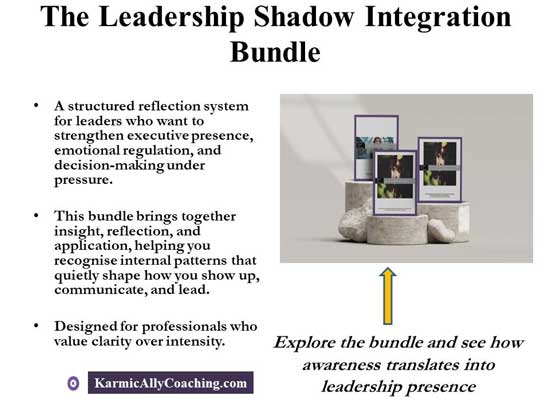
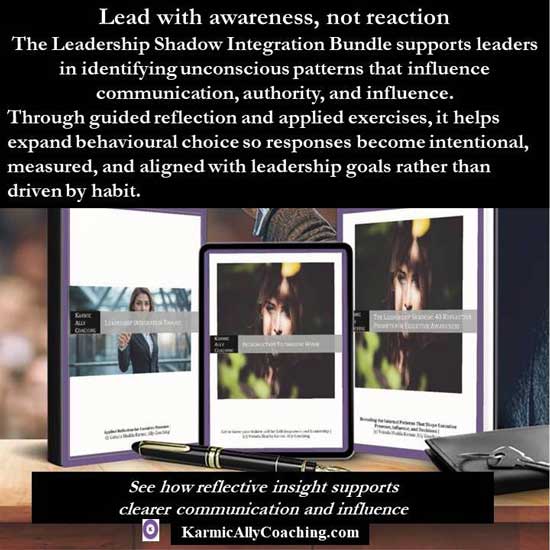
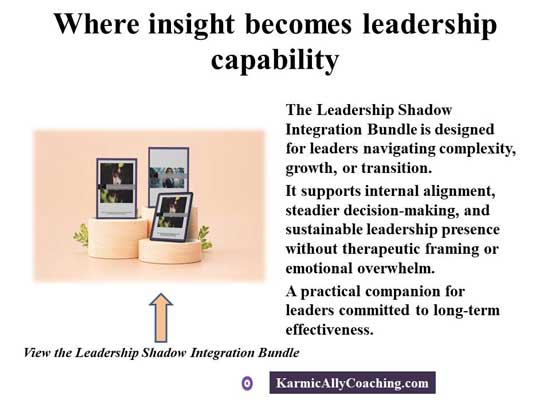
This is the lens behind the Leadership Shadow Integration Bundle—a structured, executive-safe approach to shadow work designed to build self-awareness, emotional regulation, and intentional leadership behaviour without therapeutic framing or overwhelm.
The bundle includes:
- Introduction to Shadow Work – grounding the practice in self-awareness and leadership
- The Leadership Shadow: 40 Reflective Prompts for Executive Awareness – focused, professional-grade reflection
- Leadership Integration Toolkit – applied practices for executive presence and influence
It’s designed for leaders who want clarity, not catharsis—and integration, not intensity.
👉 Explore the Leadership Shadow Integration Bundle here
Final Thought
Shadow work isn’t about dwelling on what’s hidden. It’s about leading with awareness.
When awareness increases, choice expands.
When choice expands, leadership becomes steadier, clearer, and more effective.
Your shadow isn’t a problem to solve.
It’s just information that is waiting to be understood.

 Posts
Posts
 I adhere to the Certified Coaches Alliance Code of Ethics and Standards. A copy is available on request.
 Let's Talk through the Connect Form: